

- Thoroughly revised from cover to cover, including new chapters on hypertension, cardio-oncology, cardiac amyloidosis, LVAD and heart transplantation, and cardiovascular disease in women and pregnancy
- A standardized, bulleted format ensures that you can quickly and easily find what you need
- Covers all aspects of cardiology, including the physical examination, heart failure with preserved ejection fraction, cardiovascular diseases in special populations, coronary artery disease, arrhythmias, cardiovascular imaging, and much more.
- Current guidelines from the American Heart Association and American College of Cardiology keep you up to date
- Written by residents, fellows, and clinical faculty of the distinguished Washington University School of Medicine in St. Louis
- Sale!
 Concise, portable, and user-friendly, The Washington Manual® Cardiology Subspecialty Consult, Fourth Edition, provides essential information on inpatient and outpatient management of common diseases and disorders. Edited by Drs. Justin S. Sadhu, Mustafa Husaini, and Dominique S. Williams, this edition offers state-of-the-art content on disease pathophysiology, diagnostic tools, and management options, including new biomedical discoveries and novel therapeutics. Ideal for residents, fellows, and practicing physicians who need quick access to current scientific and clinical information in cardiology, the manual is also useful as a first-line resource for internists and other primary care providers.
 - Sale!

ASPC Manual of Preventive Cardiology
by Endorsed by the American Society for Preventive Cardiology, this highly practical resource focuses on the application of current guidelines and practice standards in the clinical management of cardiovascular risk factors. The Manual presents concise descriptions of each major cardiovascular risk factor, and practical, to-the-point discussions of current best practices in clinical management. In addition, the Manual includes chapters on peripheral arterial disease, stroke, smoking, contemporary cardiovascular imaging, heart failure, metabolic syndrome, thrombosis, nutrition, special populations, novel risk factors, and psychosocial stress. Throughout the Manual, recommendations are based on the most recent prevention guidelines of the American College of Cardiology and American Heart Association, including those on Risk Assessment, Lifestyle Recommendations, Blood Cholesterol, and Obesity, as well as the new guidelines on Hypertension.Chapter authors are recognized leaders in each area of practice, and special efforts have been made by the authors and editors to ensure that the content of all chapters is as up-to-date as possible.Key Features:■ Presents a highly practical focus on the application of current guidelines and practice standards regarding cardiovascular risk factors■ Recommendations based on the most recent prevention guidelines■ Authored by recognized leaders in the field■ Covers all major cardiovascular risk factors, key methodologies in risk assessment, and special issues regarding specific patient populations - Sale!

Approaches to Left Atrial Appendage Exclusion An Issue of Interventional Cardiology Clinics
by - Sale!

Post Genomic Cardiology 2nd Ed
by In this second edition of Post-Genomic Cardiology, developing and new technologies such as translational genomics, next generation sequencing (NGS), bioinformatics, and systems biology in molecular cardiology are assessed in light of their therapeutic potential. As new methods of mutation screening emerge, both for the genome and for the “epigenome,” comprehensive understanding of the many mutations that underlie cardiovascular diseases and adverse drug reactions is within our reach.This book, written by respected cardiologist José Marín-García, features discussion on the Hap-Map: the largest international effort to date aiming to define the differences between our individual genomes. This unique reference further reviews and investigates genome sequences from our evolutionary relatives that could help us decipher the signals of genes, and offers a comprehensive and critical evaluation of regulatory elements from the complicated network of the background DNA.- Offers updated discussion of cutting-edge molecular techniques including new genomic sequencing / NGS / Hap-Map / bioinformatics / systems biology approaches
- Analyzes mitochondria dynamics and their role in cardiac dysfunction, up-to-date analysis of cardio-protection, and cardio-metabolic syndrome
- Presents recent translational studies, gene therapy, transplantation of stem cells, and pharmacological treatments in CVDs
- Sale!

Imaging Coronary Atherosclerosis
by For over 50 years, coronary angiography has been the mainstay of diagnosing and quantifying the extent of coronary artery disease. However appreciation of the inherent limitations of conventional angiography has led to a plethora of new imaging modalities, each with their relative strengths and potential pitfalls. Advances in these techniques have given clinicians, as well as researchers, an overwhelming amount of information and the need for thoughtful interpretation.This outstanding book provides a comprehensive overview of the current status of imaging of coronary atherosclerosis. Covering the wide variety of available imaging modalities, the book provides state-of-the-art knowledge from leading authorities in each area. In their discussion, the authors include both invasive and non-invasive modalities, including the gold standard coronary angiography, the growing field of IVUS, and novel techniques such as functional imaging, molecular imaging, and the integration of biomarkers.The key concepts and practical information given in this volume will provide the reader with the necessary understanding to choosing appropriate imaging studies and building confidence in their skill set with each. - Sale!

Pediatric Cardiology and Pulmonology A Practically Painless Review
by Often, information in review books can raise as many questions as it answers. This interferes with the study process, because the learner must either look up additional information or skip ahead without truly comprehending what he or she has read. As an alternative, Pediatric Cardiology and Pulmonology: A Practically Painless Review presents bite-size chunks of information that can be read and processed rapidly, helping learners to stay active while studying and to pick up new information the first time they read it. This book's question and answer format allows for self-testing or study with a partner or a group. The format also facilitates dipping into the book during a few minutes of downtime at the hospital or office. Pediatric Cardiology and Pulmonology: A Practically Painless Review is a quick and easy way to master these tricky topics and is suitable for those studying for the pediatric board exam, practicing physicians brushing up their skills, and any busy clinician who wants to learn more about these topics while on the go. - Sale!

Evidence Based Cardiology Consult
- Sale!

Nuclear Cardiology Study Guide A Technologists Review for Passing Specialty Certification Exams
- Sale!

Advances in Hemodynamics Research
- Sale!

Pediatric Cardiology Symptoms Diagnosis Treatment
by A practice-oriented overview of pediatric cardiologyEnriched with the extensive experience of leading experts in this constantly evolving field, Pediatric Cardiology is a comprehensive reference that helps cardiologists stay up-to-date on important developments in the specialty. It includes basic principles, diagnostic strategies for specific diseases, and the newest interventional catheterization techniques, giving readers the tools to successfully manage all types of pediatric heart disease.Key Features:- High-quality instructive graphs as well as over 400 color illustrations and 100 tables clarify concepts in the text
- User-friendly organization facilitates the decision making process
- Online access to more than 100 video clips on catheterization, EKG, and normal vs. diseased heart comparisons on the Thieme Media Center
- Guidelines for treating neonates with cardiac disorders
- Clearly explains echocardiography, including anatomical landmarks and typical findings
- Sale!

Tips and Tricks in Interventional Cardiology
by This book “Tips and Tricks in Interventional Cardiology” focuses on key procedures and techniques involved in interventional cardiology. Interventional cardiology has proliferated as the first approach in managing coronary artery disease. This book comprises of 15 chapters that discuss a number of practical concepts that will advance the skills of an interventional cardiologist in the catheterization laboratory. Percutaneous coronary intervention (PCI) was introduced by Andreas Grüntzig in 1977, after that alternative percutaneous approaches to balloon angioplasty (atherectomy, laser, stents have been introduced. Interventional cardiologists have now expanded their skills to structural interventions (ASD, VSD, PFO, valvular heart disease) and peripheral interventions (carotids, subclavian, renal, iliac). First chapter discusses the needs and requirements of PCI. Following chapters discusses PCI—work station, access, hemodynamics in Cathlab, radiographic views, guide catheters, guidewires, balloons—the balloon catheters, drug eluting stents and non-angiographic lesion assessment. In addition, the book also covers drugs used in cathlab, difficult subsets, structural heart disease, congenital heart disease and complication of percutaneous coronary intervention. - Sale!

New Developments in Myocardial Ischemia Research
- Sale!

Transradial Angiography and Intervention An Issue of Interventional Cardiology Clinics
by - Sale!

Management of Atrial Fibrillation A Practical Approach
by Atrial Fibrillation is becoming a twenty-first century epidemic. It remains the most common form of sustained arrhythmia with significant mortality, morbidity and cost to the health care system. It is the most common cause of hospital admissions among all arrhythmias. Its prevalence increases with the aging population and is often associated with many other cardiac and noncardiac conditions, most notably congestive heart failure, hypertension, diabetes, and coronary artery disease. Although significant progress in understanding the epidemiology, natural history and mechanism has been made, the antiarrhythmic therapy in patients with Atrial Fibrillation is less satisfactory.Management of Atrial Fibrillation: A Practical Approach is the perfect pocket guide for those who care for patients afflicted by Atrial Fibrillation. From the history of the condition and the subsets of patients, to therapeutic and preventive procedures, Management of Atrial Fibrillation comprehensively covers all aspects in managing this increasingly prevalent disorder. Written by leading authorities in the field with vast experience in practical medicine, the book creates a clinically orientated, evidence based "fast fact" type resource for cardiologists, trainees and related healthcare professionals. - Sale!
Common Problems in Cardiology

Case Files Cardiology
- Sale!

The ESC Textbook of Preventive Cardiology Clinical Practice

Interventional Cardiology in the Elderly
by This book provides an in depth review of the current practice in treating elderly patients with coronary artery disease (CAD) as well as an update of the existing literature. It is intended to reflect the current science of elderly patients with stable angina, acute coronary syndromes and those patients who are forwarded for CAGB procedures. Evidence in the elderly patient group is often limited and/or non-existent therefore the main challenge, even for further research, will be to define the role of geriatric preconditions and its impact on outcome. A second topic will be to clarify how, if ever, existing cardiological outcome values like mortality can be applied to elderly patients or if other values like improvement of functional status or quality of life are more suitable parameters to measure interventional success in elderly patients. The role of pharmacotherapy in advanced age has to be discussed. These topics will be embedded in epidemiological, pathophysiological and ethical aspects of interventional treatment of CAD in older age.Controversies in Cardiology
by- Sale!

Clinical Cases in Cardiology A Guide to Learning and Practice
by This book presents and describes a series of informative clinical cases with the aim of providing the reader with a clear understanding of the most frequent and challenging scenarios that a cardiologist may face during daily clinical practice. All major topics in modern clinical cardiology are addressed, including acute ischemic heart disease, conditions that mimic ischemic heart disease, heart failure and resynchronization therapy, cardiomyopathy, valvular heart disease, arrhythmias and channelopathies. Guidance is provided on imaging techniques and their interpretation, patient management taking into account potential comorbidities and follow-up appropriate to the clinical circumstances. The paradigmatic clinical cases in this book will serve as a sound basis for learning for medical students, residents and others wishing to meet successfully the challenges posed by cardiac disease. In addition, the book will be a very useful reference for the more experienced cardiologist. - Sale!
Interventional Cardiology Imaging An Essential Guide
by Interventional cardiology has transitioned from angiographic subjective analysis of stenosis severity into assessment of plaque characteristics and objective assessment of stenosis severity. The evolution of novel interventional imaging modalities is progressively altering our understanding of coronary artery disease diagnosis and prognosis.This book will be an essential companion to assist interventional cardiologists in better assessing patients with Coronary Artery Disease. It will encompass and review all interventional imaging modalities and provide guidance for interventional cardiologists to use these modalities. - Sale!

The EHRA Book of Pacemaker ICD and CRT Troubleshooting Case Based Learning With Multiple Choice Questions
- Sale!

Cardiac Drug Therapy 8th Ed
by This book is an essential guide to the medical treatment of the cardiac patient and presents core principles of cardiovascular therapeutics as well as drug recommendations. Major classes of drugs are featured, including beta-blockers, ACE inhibitors, calcium antagonists, diuretics, and antiplatelet agents and unique insights into the controversies surrounding the use of specific drugs are explored, with answers given to the question: do beta blockers and diuretics really cause diabetes? Properties, dosage, side effects, potential salutary benefits, and drawbacks on virtually all commercially available cardiac drugs are examined. This revised edition is thoroughly updated and addresses the entire spectrum of heart disorders, such as hypertension, angina, myocardial infarction, heart failure, arrhythmias, cardiac arrest, and dyslipidemias. New chapters include endocrine heart diseases, management of cardiomyopathies, and newer agents. In addition, topics such as cardiac drugs in pregnancy and lactation and drug interactions are covered. Cardiac Drug Therapy, Eighth Edition, is an authoritative and clinically relevant resource for cardiologists, cardiology fellows, and internists. - Sale!

Cardiology A Practical Handbook
- Sale!

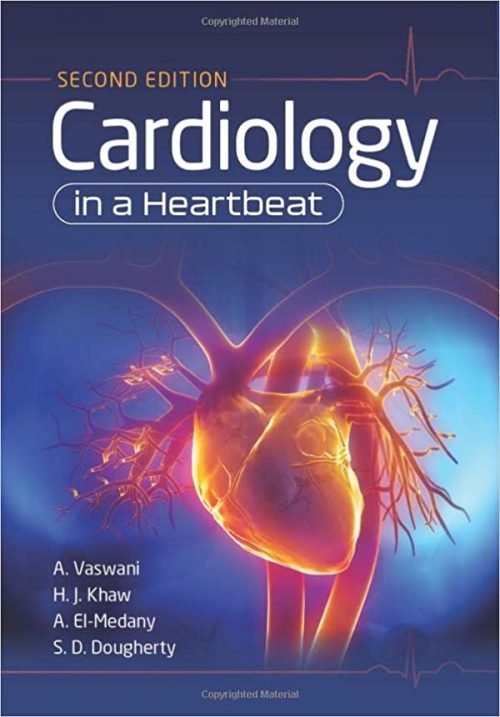
Cardiology in a Heartbeat 2nd Edition
by This new edition has been completely revised to take in all the NICE, ESC and ESVS guidelines that have been updated over the last 5 years. It continues to couple a comprehensive overview with an attractive design and student-friendly layout to produce a book that is accessible, relevant and current. Written by an experienced author team, it covers all the cardiology a medical student should know.Each section of the book starts with an ‘In a Heartbeat’ box which provides a useful summary of what you need to learn; these also act as excellent exam revision tools.The book is interspersed with a variety of additional features to help you understand the subject:- Exam Essentials boxes tell you what you must know about the topic
- Pro-tips give you key extra knowledge to further improve your understanding
- New What’s the Evidence? boxes describe the key trials influencing practice
- Why? boxes explain the pathophysiology and rationale behind certain decisions and processes
- Guidelines summarise the recent recommendations from key bodies to ensure you are up to date with best practice.
- Sale!
The ESC Handbook of Preventive Cardiology Putting Prevention into Practice
by The ESC Handbook of Preventive Cardiology is a 'how-to' manual for busy healthcare professionals. Complementing the 2012 Joint European Guidelines on cardiovascular disease prevention and in line with recommendations from the European Association of Preventive Cardiology and it is an invaluable source of tools and skills to assist with the delivery of effective cardiovascular disease prevention.While acknowledging that cardiovascular disease prevention efforts must be complemented by societal and community based strategies, this handbook focuses on practical strategies that can be used in clinical settings. Concise and easily accessible, it guides readers through the patient and family pathway - from patient identification, recruitment of the patient and family, assessing lifestyle and risk factors, to managing lifestyle change, reducing risk factors, and compliance with cardio-protective drug therapies. Information on how to deliver a health promotion workshop programme and run a supervised exercise programme is also included.Previously published as Preventive Cardiology: A practical manual and now fully revised and updated and packed with checklists and diagrams, such as risk estimation charts, The ESC Handbook of Preventive Cardiology helps health workers contribute in real and practical ways to the prevention of artherosclerotic cardiovascular disease.This print edition of The ESC Handbook of Preventive Cardiology, Putting Prevention into Practice comes with access to the online version on Oxford Medicine Online, for as long as the edition is published by Oxford University Press. By activating your unique access code, you can read and annotate the full text online, follow links from the references to primary research materials, and view, enlarge and download all the figures and tables. - Sale!

Clinical Cardiology Current Practice Guidelines Updated Edition 2nd Ed
Master Pass MRCP Cardiology MCQs
by ew primary care organisations are demanding personal and practice-based professional development plans to underpin revalidation of clinicians' professional registration or accreditation of practices. This workbook is unique in showing the reader how to combine and integrate the two and matches national guidelines that explain how to apply guidance in real life for maximum effect. With action plans key facts and references it emphasises how to prioritise learning needs provides examples of plans and focuses on a variety of clinical and organisational topics. It will enable general practitioners nurses therapists and practice managers to design and apply personal development plans as individuals and as multidisciplinary practice teams.- Sale!

IOC Manual of Sports Cardiology
by For the practicing sports medicine physician at the front line of sports cardiology, this comprehensive and authoritative resource provides a centralized source of information which addresses this important topic in an accessible manner. This book recognises the broad role sports physicians play, from liaison between athlete, family, specialist, and coaching staff based on the identification of pathological heart disease, to being first to respond when an athlete collapses. The chapters include basic science of disease and disorders, pathophysiology, diagnosis, the effect or role of exercise, and clinical management guidance.- Provides a comprehensive and authoritative overview on all aspects of sports cardiology
- Addresses cardiac abnormalities confronting Olympic athletes, Paralympic athletes, as well as athletes competing on all other levels of competition
- Endorsed by the Medical Commission of the International Olympic Committee (IOC)
- Written and edited by global thought leaders in sports medicine

Cardiology Science and Technology
by Cardiology Science and Technology comprehensively deals with the science and biomedical engineering formulations of cardiology. As a textbook, it addresses the teaching, research, and clinical aspects of cardiovascular medical engineering and computational cardiology. The books consists of two sections. The first section deals with left ventricular (LV) wall stress, cardiac contractility, ventricular remodeling, active wall stress and systolic pressure generation, and vector cardiogram characteristics, with applications in cardiology. The second section covers ECG signal analysis for arrhythmias detection, LV pumping (intra-LV, aortic and coronary flow) characteristics, and coronary bypass surgery design, with applications in cardiology and cardiac surgery. This book is like an exciting train ride through the heart and into blood flows within its chamber, the coronary tree, the aorta, and finally into coronary flow and bypass grafting. The train starts from the heart’s central station and journeys through exciting places of heart wall stresses, cardiac contractility measures to characterize heart failure, and active stress generation to develop systolic heart pressure. We learn about cardiomyopathic heart remodeling and its surgical ventricular restoration, theory of ECG and vector cardiogram with medical applications, and heart rate variability signal processing to detect cardiac arrhythmias. In the heart chamber, we witness the amazing intricate intra-ventricular flow patterns. Then, we study pressure pulse wave propagation into the aorta, determination of pulse wave velocity and arterial elasticity as a measure of arteriosclerosis. We climb into the mountainous coronary terrain and look at the fascinating scenery of coronary flows and myocardial perfusion that governs cardiac contractility. Finally, we arrive at coronary bypass grafting and witness the new sequential anastomosis design for enhanced patency. This fascinating journey helps us to fully appreciate cardiology from the science, technology, engineering, and mathematics viewpoint. The book represents what can be termed as computational cardiology, and hence belongs to the emerging field of computational medicine.- Sale!
Short Stay Management of Atrial Fibrillation
by This book provides a road map for the efficient and successful management of atrial fibrillation (AF) in the short stay unit. It describes the problem, defines the measures of successful treatment, elucidates interventions, and supplies the tools for achieving quality care. Organized in four parts, it covers the impact of AF on patient populations; the presentation and management of AF; the transition to the outpatient environment; and systems management. Topics include the economic consequences of AF; cardioversion and cardiac implantable electronic devices in AF management; education of the AF patient and discharge planning; and quality metrics in AF. The book also provides order sheets and process criteria with which institutions can successfully manage the AF patient in the short stay unit, thus optimizing patient outcomes, patient satisfaction, and operational efficiencies. Short Stay Management of Atrial Fibrillation is a valuable resource for cardiologists, emergency medicine physicians, electrophysiologists, and other healthcare professionals involved in AF management.